As the Admin of ToasterFood.com and a technician with over a decade of hands-on experience, I understand that the heart of any toaster, or indeed any heating appliance, lies in its heating element. These unsung heroes transform electricity into the warmth that perfectly browns your bread or heats your space. While countless materials can generate heat, two stand out for their prevalence and distinct characteristics: quartz and nichrome. Understanding the fundamental differences between these heating powerhouses is crucial for anyone looking to make an informed decision, whether you’re a home cook selecting a new toaster oven or an engineer designing the next generation of heating solutions. Let’s delve into what makes each element unique, their advantages, disadvantages, and which might be the best fit for your specific needs.
What are Nichrome Heating Elements?
Nichrome, an alloy primarily composed of nickel and chromium, is a classic workhorse in the world of resistive heating. Its ability to generate heat when an electric current passes through it is due to its high electrical resistance. This fundamental principle of resistance heating makes nichrome coils a staple in countless appliances.
Nichrome boasts several properties that make it ideal for heating applications. It exhibits high heat resistance, maintaining its structural integrity even at elevated temperatures, and possesses a high melting point. Crucially, nichrome is highly resistant to oxidation, meaning it doesn’t easily rust or deteriorate when exposed to air and heat. This alloy is also ductile, allowing it to be easily coiled and shaped into various forms and sizes, from thin wires in a pop-up toaster to more robust elements in industrial furnaces.
The advantages of nichrome heating elements are clear: they are renowned for their durability and long lifespan, often withstanding repeated heating cycles over many years. Their versatility allows them to be used across a broad spectrum of products, from everyday household items like hair dryers and waffle irons to more specialized applications in manufacturing and automotive defrosting systems. While nichrome elements are highly efficient, converting nearly all electrical energy into heat, their primary method of heat transfer is typically through convection (heating the surrounding air) and some radiation.
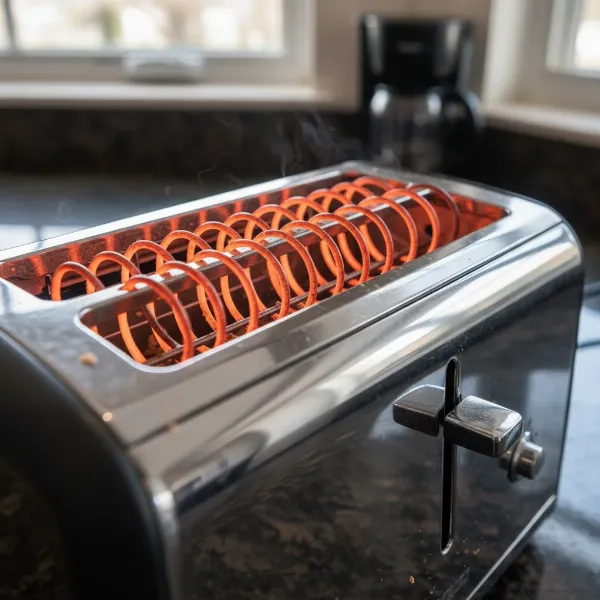 Close-up of glowing nichrome heating coils inside a toaster or appliance.
On the downside, nichrome elements generally take longer to reach their peak operating temperature compared to radiant heating methods. While they offer consistent and reliable heat, the initial heat-up time might be a consideration for applications demanding instant warmth.
What are Quartz Heating Elements?
Quartz heating elements represent a distinct approach to heat generation, primarily utilizing infrared (radiant) heating technology. At their core, quartz heaters often house a resistance wire—which can indeed be nichrome or even tungsten—encased within a durable quartz glass tube. The quartz tube itself plays a critical role, not just in protecting the internal filament, but also in efficiently emitting medium-wave infrared radiation. This radiation directly heats objects and people in its path, rather than primarily warming the air around it.
The most striking advantage of quartz heating elements is their incredible speed. They offer an almost instant heat-up time, reaching significant temperatures within seconds of activation. This rapid response makes them exceptionally energy-efficient for targeted or spot heating, as very little energy is wasted on heating unoccupied spaces or the surrounding air. They are often silent in operation, as most models don’t rely on fans for heat distribution.
However, quartz elements come with their own set of considerations. The quartz glass tubes, while resistant to thermal shock, can be fragile and are susceptible to breakage if mishandled or impacted. This can contribute to a shorter overall lifespan for the element compared to robust nichrome coils. While excellent for focused heating, their range is typically limited, making them less effective for evenly warming large rooms. Users might also notice that quartz heaters can make the air feel drier, and their hot surfaces pose a safety risk if touched inadvertently.
Common applications for quartz heating elements include portable space heaters for garages, workshops, and bathrooms, where instant, localized warmth is desired. They are also found in some toaster ovens for rapid toasting and industrial settings requiring high-speed, precise heating processes.
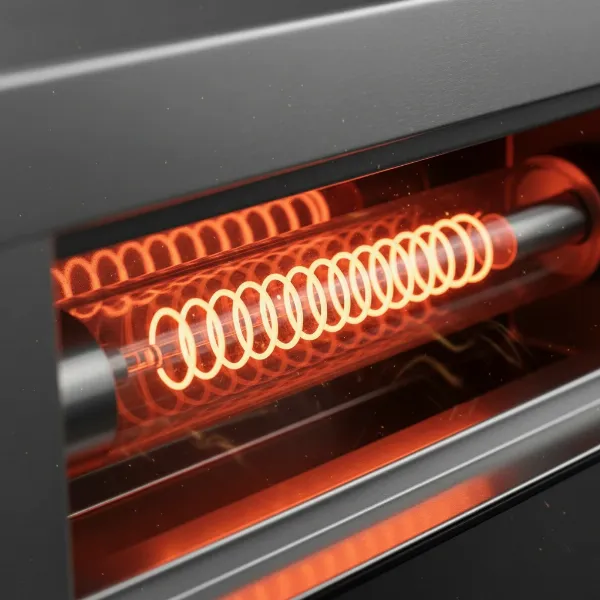 Infrared radiant quartz heating element glowing brightly in a space heater.
Quartz vs. Nichrome: A Direct Comparison
When choosing between quartz and nichrome heating elements, it’s essential to compare their core characteristics. Here’s a breakdown to help illuminate their differences:
| Feature | Nichrome Heating Elements | Quartz Heating Elements |
|---|---|---|
| Heating Mechanism | Resistance heating (convection and some radiation) | Infrared (radiant) heating, often with internal filament |
| Heat-up Speed | Slower to reach peak temperature | Very fast, almost instant (seconds) |
| Efficiency | Highly efficient in general; heats air more broadly | Highly efficient for targeted/spot heating |
| Durability | Very durable, high resistance to oxidation and wear | Fragile (quartz glass tube), susceptible to impact |
| Lifespan | Long service life | Generally shorter due to fragility, elements can wear out |
| Typical Heat | Ambient warmth, heats surrounding air | Direct, intense, focused heat on objects |
| Applications | Pop-up toasters, hair dryers, industrial furnaces | Spot heaters, toaster ovens (for toast), industrial drying |
| Cost | Often lower initial cost for wire, long-term operational savings | Efficient operation can lead to lower running costs |
| Safety | Less prone to breakage, but still operates at high temperatures | Hot surface risks, potential for breakage |
Choosing the Right Heating Element for Your Toaster or Appliance
The choice between quartz and nichrome often comes down to the specific application and your priorities.
For classic pop-up toasters, nichrome coils are the predominant choice. Their durability, ability to withstand high temperatures, and reliable resistance heating provide the consistent, even browning we expect. The slight delay in heat-up is negligible for a few slices of toast.
In toaster ovens, you might find a combination or a preference for one over the other depending on the primary function. Quartz elements excel for quick toasting, delivering that rapid, crisp finish. However, for baking, roasting, or slower, more even heating, robust nichrome elements might be preferred for their ability to maintain consistent temperatures over longer periods without the fragility concerns of quartz tubes.
When it comes to space heaters, quartz heaters are ideal for those who need instant, directed warmth in a small area, such as a drafty workshop or a bathroom on a cold morning. Nichrome-based convection heaters, on the other hand, are better suited for gradually warming a larger room by circulating heated air.
Consider your needs: if speed and targeted, direct warmth are paramount, a quartz element might be your best bet. If durability, broad heat distribution, and consistent performance in a wide range of conditions are more important, nichrome likely takes the crown.
Maintaining Your Heating Elements for Longevity
Regardless of the type of heating element, proper maintenance can significantly extend its lifespan and ensure optimal performance.
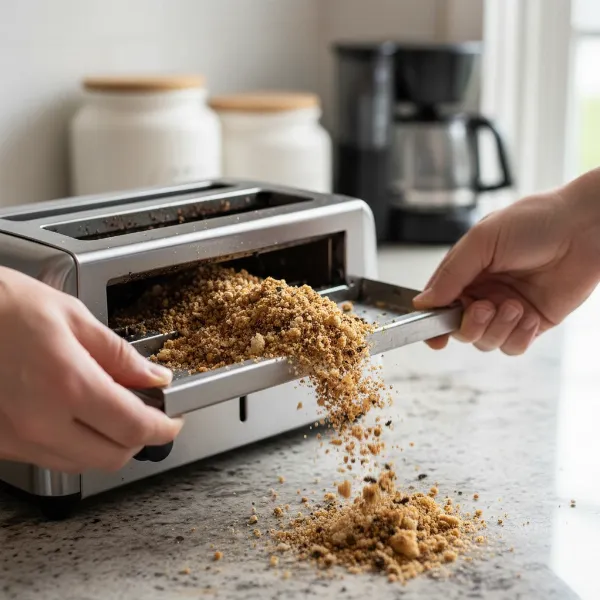
For nichrome elements, general cleanliness is key. Ensure there’s no buildup of food crumbs or debris around the coils, as this can create hot spots and reduce efficiency. Regular, gentle cleaning of the toaster interior or appliance can prevent such issues.
Quartz elements require a bit more delicate handling due to their glass tubes. Avoid any impact that could lead to cracking or breakage. Keeping the quartz tubes clean of grease or dust buildup is also important, as this can hinder their radiant heat output. Always allow the appliance to cool completely before attempting any cleaning.
For both types, adhering to the manufacturer’s guidelines for use, voltage, and cleaning is paramount for safety and longevity.
Conclusion
The debate between quartz and nichrome heating elements isn’t about one being inherently “better” than the other; rather, it’s about understanding which material is best suited for a particular job. Nichrome, with its robust resistance heating, offers unparalleled durability and versatility, serving as the reliable workhorse in countless heating applications, from your trusty toaster to industrial ovens. Quartz, on the other hand, provides the undeniable advantage of rapid, targeted infrared heat, making it perfect for instantaneous warmth and focused cooking.
As you explore the world of toasters and other heating appliances, knowing these distinctions empowers you to appreciate the engineering behind your favorite gadgets. Whether you prioritize speed, durability, or a specific type of heat, there’s an element designed to meet your needs. What heating elements do you find most effective in your daily life, and why?
Frequently Asked Questions
Are quartz heaters more energy-efficient than nichrome heaters?
|
Our Picks for the Best Toaster in 2026
As an Amazon Associate I earn from qualifying purchases.
|
||
| Num | Product | Action |
|---|---|---|
| 1 | Elite Gourmet ECT1027B Cool Touch Toaster with 6 Temperature Settings & Extra Wide 1.25" Slots for Bagels, Waffles, Specialty Breads, Puff Pastry, Snacks, ETL Certified, 2 Slices, Black |

|
| 2 | bella 2 Slice Slim Toaster, Fits-anywhere™ Kitchenware, 6 Setting Shade Control with Reheat & Cancel Buttons, Fits sourdough, 10” Long Slot, Anti Jam & Auto Shutoff, 900 Watt, Blossom |
|
| 3 | bella 2 Slice Slim Toaster, Fits-anywhere™ Kitchenware, 6 Setting Shade Control with Reheat & Cancel Buttons, Fits sourdough, 10” Long Slot, Anti Jam & Auto Shutoff, 900 Watt, Plum |
|
| 4 | bella 2 Slice Slim Toaster, Fits-anywhere™ Kitchenware, 6 Setting Shade Control with Reheat & Cancel Buttons, Fits sourdough, 10” Long Slot, Anti Jam & Auto Shutoff, 900 Watt, Oatmilk |
|
| 5 | Touch Screen Toaster - 4 Slice, 2 Extra Long Slots - 5 Bread Types and 6 Browning Levels - Defrost, Reheat, Favorite, & Single Slot Modes - For Toast, Bagels, & Waffles – White |
|
| 6 | bella 2 Slice Slim Toaster, Fits-anywhere™ Kitchenware, 6 Setting Shade Control with Reheat & Cancel Buttons, Fits Sourdough, 10” Long Slot, Anti Jam & Auto Shutoff, 900 Watt, Seaglass |
|
| 7 | KEYWIND VTG RIC DELUXE LONG SE |
|
| 8 | bella 2 Slice Slim Toaster, Fits-anywhere™ Kitchenware, 6 Setting Shade Control with Reheat & Cancel Buttons, Fits Sourdough, 10” Long Slot, Anti Jam & Auto Shutoff, 900 Watt, Surf |
|
| 9 | STRING SET BASS STD 45w 55w 75w 105w |
|
| 10 | Amazon Basics 2 Slice Toaster, With 6 Browning Settings, Extra Wide Slots For Bagels and Special Breads, Removable Easy-to-Clean Crumb Tray, Cancel/Defrost/Bagel Buttons, 900W, Black & Silver |
|
For targeted, spot heating, quartz heaters are often considered more energy-efficient because they directly heat objects through infrared radiation, reducing wasted energy on warming the surrounding air. Nichrome elements, while highly efficient at converting electricity to heat, typically warm air more broadly through convection.
Which type of heating element lasts longer?
Nichrome heating elements generally boast a longer service life due to their robust alloy construction and resistance to oxidation and degradation. Quartz elements, being encased in glass tubes, are more susceptible to physical impact and breakage, potentially leading to a shorter lifespan.
Can nichrome wire be found inside a quartz heating element?
Yes, it is common for quartz heating elements to use nichrome (or sometimes tungsten) as the internal resistance wire that generates the initial heat. The quartz tube then serves as a protective casing and an efficient emitter of infrared radiation.
What are common applications for each type?
Nichrome elements are widely used in pop-up toasters, hair dryers, waffle irons, and industrial furnaces. Quartz elements are popular in spot heaters, some toaster ovens (for fast toasting), and industrial processes requiring rapid, directed heat.
Is one safer than the other?
Both types of heating elements operate at high temperatures and require caution. Quartz heaters can have very hot external surfaces that pose a burn risk. Nichrome elements, while less fragile, are still high-temperature components. Always follow manufacturer safety guidelines and ensure appliances have features like automatic shut-off and overheat protection.