Let’s be honest, we’ve all been there. It’s a busy morning, you’re fumbling for the coffee, and you pop a slice of bread into the toaster. You’re hoping for that perfect, golden-brown masterpiece, but what comes out is either a pale, floppy disappointment or a blackened, smoky tragedy. It begs the eternal breakfast question: What Is The Perfect Toast Shade? As the Senior Product Expert at Toaster World, I’ve dedicated my career to this very question, and I’m here to tell you the answer is both wonderfully simple and surprisingly complex.
The truth is, the “perfect” shade is deeply personal, a culinary fingerprint unique to you. But achieving your perfect shade consistently? That’s where science, technology, and a little bit of know-how come together. This isn’t just about browning bread; it’s about mastering a daily ritual. So grab your favorite loaf, and let’s embark on a journey to find your ultimate toast nirvana.
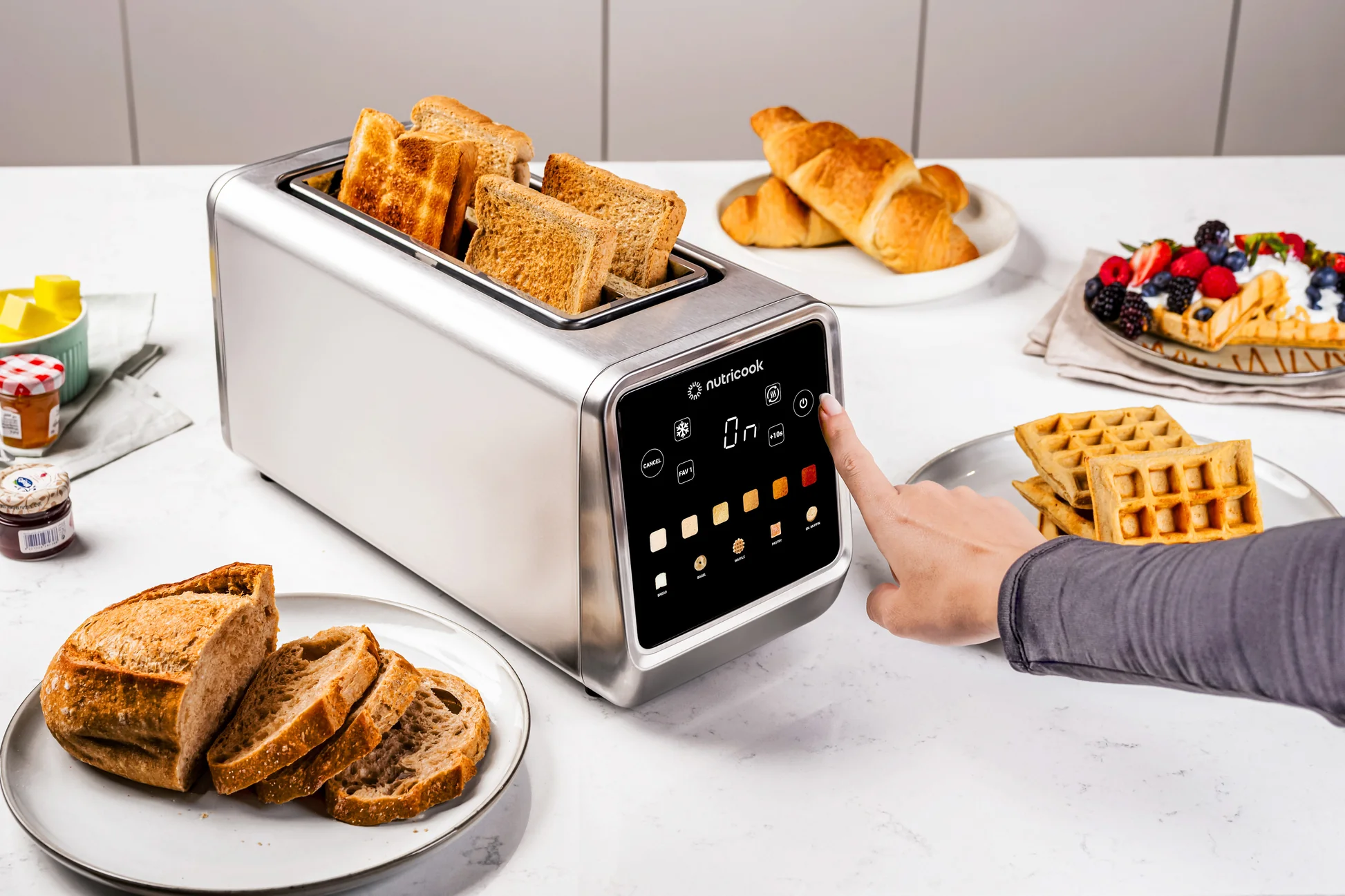
The Spectrum of Toast: More Than Just a Color
Before we can find the perfect shade, we need to understand what’s happening inside that little countertop machine. When bread is heated, it undergoes a magical chemical process called the Maillard reaction. This is the same reaction that gives seared steaks, roasted coffee, and fried onions their delicious, complex flavors.
It’s a reaction between amino acids and reducing sugars that creates hundreds of new aroma and flavor compounds. The shade of your toast is a direct visual indicator of how far this reaction has progressed.
The Toast Shade Scale
Think of it as a spectrum, where each level offers a unique sensory experience:
- Shade 1-2: Barely-There Blonde. The bread is warm and slightly dried out, but with very little color. The flavor is mostly that of the bread itself. This is for those who prefer a soft texture and just a hint of warmth.
- Shade 3-4: Golden Glow. This is often considered the classic toast. You get a light, satisfying crunch on the outside while the inside remains soft and fluffy. The Maillard reaction is just beginning, introducing subtle nutty and sweet notes. It’s the perfect canvas for butter and jam.
- Shade 5-6: Bronze Beauty. We’re entering robust territory here. The toast has a firm, audible crunch and a deep bronze color. The flavors are more pronounced—think notes of caramel and toasted nuts. This is the shade that can stand up to bold toppings like avocado or smoked salmon.
- Shade 7-8: Bold & Dark. This is for the toast adventurers. The surface is deeply browned, almost verging on black at the edges. The texture is very crunchy, and the flavor is intense, with smoky, slightly bitter notes that some people absolutely crave.
- Shade 9+: The Danger Zone. At this point, you’ve moved past the Maillard reaction and into carbonization. The toast is burnt, the flavor is acrid, and your smoke alarm is probably singing the song of its people. Let’s try to avoid this.
Understanding this spectrum is the first step. The next is figuring out how to land on your preferred shade every single time.
Why is Achieving the Perfect Toast Shade So Difficult?
If it were as simple as setting a dial, this article wouldn’t be necessary. The challenge lies in a few key variables that can throw off your results.
Answering this directly: The difficulty in achieving the perfect toast shade comes from a combination of the bread’s sugar and moisture content, the toaster’s inconsistent heating elements, and the fact that most toaster dials are simple timers, not color sensors.
The Bread Variable
Not all bread is created equal. The type of bread you use has a massive impact on how it toasts.
- White Sandwich Bread: Low sugar and moisture content mean it toasts quickly and evenly. It’s a reliable starting point.
- Sourdough: Its irregular structure and lower sugar content mean it can take longer to brown and may toast unevenly.
- Brioche or Challah: These are enriched with sugar, eggs, and butter. That high sugar content means they can go from golden to burnt in the blink of an eye. You’ll need a lower setting.
- Whole Wheat & Multigrain: These have a higher density and moisture content, often requiring a longer toasting time or a higher setting to achieve a good crunch.
The Toaster’s Role
Your toaster is your most important tool, but many models have their quirks. The number one issue is often uneven heating. Cheaper toasters may have “hot spots” in their heating elements, leading to toast that’s burnt in one corner and pale in another. The materials and design of the heating elements—whether they’re standard nichrome wires or more advanced quartz elements—play a huge role in the evenness and speed of toasting.
|
Our Picks for the Best Toaster in 2026
As an Amazon Associate, we earn from qualifying purchases.
|
||
| Num | Product | Action |
|---|---|---|
| 1 | Elite Gourmet ECT-3100 Long Slot 4 Slice Toaster, Reheat, 6 Toast Settings, Defrost, Cancel Functions, Built-in Warming Rack, Extra Wide Slots for Bagels & Waffles, Stainless Steel & Black |

|
| 2 | Mueller UltraToast Full Stainless Steel Toaster 4 Slice, Long Extra-Wide Slots for Bagels and Waffles, 6 Browning Levels, LED Display, Cancel/Defrost/Reheat Functions & Removable Tray, Kitchen Gadgets |
|
| 3 | Amazon Basics 2 Slice Toaster, With 6 Browning Settings, Extra Wide Slots For Bagels and Special Breads, Removable Easy-to-Clean Crumb Tray, Cancel/Defrost/Bagel Buttons, 900W, Black & Silver |
|
| 4 | Amazon Basics 4 Slice Toaster, 6 Browning Settings, Removable Crumb Tray, Bagel and Defrost Function, Cancel Button, 1600W, Black |
|
| 5 | Elite Gourmet ECT1027B Cool Touch Toaster with 6 Temperature Settings & Extra Wide 1.25\" Slots for Bagels, Waffles, Specialty Breads, Puff Pastry, Snacks, ETL Certified, 2 Slices, Black |
|
| 6 | Hamilton Beach 2 Slice Toaster with Extra-Wide Slots, Bagel Setting, Toast Boost, Slide-Out Crumb Tray, Auto-Shutoff & Cancel Button, Defrost Function, Stainless Steel (22794) |
|
| 7 | Amazon Basics 2 Slice Toaster, With 6 Browning Settings, Extra Wide Slots For Bagels and Special Breads, Removable Easy-to-Clean Crumb Tray, Cancel/Defrost/Bagel Buttons, 900W, Black & Silver |
|
| 8 | Cuisinart 4 Slice Toaster, Compact Stainless Steel Toaster with Extra-Wide Slots for Toasting Bread, French Toast, Bagels and Pastries, Defrost & Reheat Functions, CPT-180P1, Brushed Stainless |
|
| 9 | bella 2 Slice Slim Toaster, Fits-anywhere™ Kitchenware, 6 Setting Shade Control with Reheat & Cancel Buttons, Fits sourdough, 10” Long Slot, Anti Jam & Auto Shutoff, 900 Watt, Oatmilk |
|
| 10 | Black Toaster 2 Slice, Extra Wide Slot Toaster for Bagels, Bread, Waffles, 7 Shade Settings, 4 Main Functions, Removable Crumb Tray, 900 Watts Toasters, Black Stainless Steel |
|
Toaster Features That Put You in Control
When you’re ready to get serious about your toast, you need a machine with the right features. Forget about the number of slots for a second and focus on the technology that governs browning.
- Precise Browning Control: Look for a toaster with a wide range of settings, not just three or four. Digital displays can offer even more granular control. Remember, these settings are almost always timers. A “4” doesn’t mean “shade 4”; it means a specific amount of time.
- “A Bit More” Function: This is a game-changer. If your toast pops up and it’s just a little too light, one press of this button lowers it for a short, controlled burst of extra toasting time. It prevents the guesswork of starting a full new cycle.
- “Lift & Look” or “Peek & Pop”: This brilliant feature allows you to manually lift the carriage mid-cycle to check the browning progress without canceling or resetting the timer. It gives you ultimate visual control.
- Wide and Self-Centering Slots: To get an even toast, the bread needs to be held perfectly in the middle, equidistant from the heating elements on both sides. Self-centering guides are non-negotiable for anyone serious about what is the perfect toast shade. For a deeper dive, check out our guide to the best long-slot toasters for artisanal bread.
How to Calibrate Your Toaster for Perfect Results
Ready to become a toast master? Follow these simple steps to dial in your machine and find your magic number.
- Start Fresh: Use a standard slice of fresh, room-temperature white bread. This is your control variable.
- Go for the Middle: Set your toaster’s browning dial to the exact middle setting. For a dial that goes to 6, start at 3.
- Toast and Observe: Run a full cycle. Don’t walk away. Watch how it browns. When it pops up, analyze the result. Is it too light? Too dark?
- Adjust and Repeat: If it was too light, move the dial up by half a step (e.g., to 3.5). If it was too dark, move it down. Use a new slice of bread and repeat the process.
- Find Your Number: Continue this process until you achieve a shade you love. That is your baseline number for that specific type of bread. Make a mental note of it.
“The biggest mistake people make is treating their toaster dial like a universal setting. It’s a timer, and it’s relative. Finding the perfect toast shade is about learning your machine and your bread. Consistency in your method is the key to consistent results.”
— Dr. Amelia Grant, Culinary Scientist
Frequently Asked Questions About the Perfect Toast Shade
What is the most popular toast shade?
Based on consumer surveys and general preference, the most popular toast shade is a “golden brown,” typically falling between a 3 and 5 on a 1-to-8 visual scale. It offers a pleasant crunch without losing the bread’s soft interior.
Do toaster browning settings correspond to a specific shade?
No, they don’t. The numbers on a toaster dial almost always correspond to time, not a color sensor. A setting of ‘4’ on a Breville toaster will likely produce a different result than a ‘4’ on a Cuisinart because their wattage and heating cycles differ.
Why does my toast come out uneven?
Uneven toasting is usually caused by two things: heating elements that have hot or cold spots, or bread that isn’t centered properly in the slot. Look for toasters with self-centering guides to solve the second problem.
Should I use a different setting for frozen bread?
Absolutely. Most modern toasters have a “Frozen” button. This function typically extends the toasting time by about 30%. It defrosts the bread gently first before beginning the main browning cycle, ensuring an even toast from the inside out.
How can I get the perfect toast shade every single time?
Consistency is key. Use the same type of bread, start with it at the same temperature (room temp is best), and use a toaster with reliable, even heating. Once you find the right setting for your favorite bread, stick with it. To learn more, read our tips on how to maintain your toaster for peak performance.
Your Toast, Your Perfect Shade
At the end of the day, the journey to find what is the perfect toast shade is a delicious experiment in personal preference. There is no right or wrong answer—only what tastes incredible to you. Whether you prefer a whisper of warmth or a bold, crunchy bite, the power to achieve it is in your hands.
By understanding the science of toasting, knowing what features to look for in a machine, and taking a moment to calibrate your settings, you can transform a mundane morning routine into a moment of culinary perfection. The right toaster isn’t just an appliance; it’s your partner in crafting the perfect start to your day. So go ahead, experiment, and enjoy the simple, profound pleasure of a perfectly made slice of toast.