The humble toaster holds a cherished spot in countless kitchens worldwide, faithfully crisping up our mornings. Yet, like all appliances, even the most reliable toaster eventually reaches the end of its useful life, leaving us with the question: what’s the most responsible way to dispose of it? Simply tossing it in the bin can contribute to environmental harm and even pose safety risks. Understanding how to properly recycle your old toaster, which is classified as electronic waste (e-waste), is crucial for protecting our planet, recovering valuable materials, and ensuring compliance with local regulations. This comprehensive guide will walk you through the why, what, and how of responsibly recycling your toaster, ensuring your appliance contributes to a greener future even after its toasting days are over.
Why Proper Toaster Recycling Matters
Discarding a toaster improperly has far-reaching consequences for the environment, safety, and resource management. Toasters, whether pop-up models or larger toaster ovens, are considered e-waste due to their electrical components and wiring.
Firstly, the environmental impact is significant. Toasters, along with other small appliances, can contain hazardous materials such as cadmium, lead, lithium, and other heavy metals. When these items are sent to landfills, these toxic substances can leach into the soil and groundwater, contaminating ecosystems and potentially affecting human health. Furthermore, landfills are rapidly reaching capacity, and reducing e-waste helps alleviate this strain.
Secondly, there are serious safety hazards associated with improperly disposed toasters. Their internal wiring and heating elements, even when broken, can pose a fire risk if crushed or damaged in a garbage truck or landfill. These components can spark, igniting flammable materials around them and creating unsafe conditions.
Thirdly, responsible recycling enables valuable resource recovery. Toasters are made from various materials, including steel, aluminum, copper wiring, and plastics. Recycling allows these materials to be extracted and reused in new products, reducing the need for virgin raw materials and the energy-intensive processes of mining and manufacturing. This circular approach conserves resources and lowers carbon emissions.
Finally, legal compliance is a growing consideration. Many states and municipalities have enacted laws restricting or prohibiting the disposal of electronics in regular household trash, imposing fines that can range up to hundreds of dollars for non-compliance. Choosing responsible recycling methods helps you avoid these penalties and contributes to a more sustainable community.
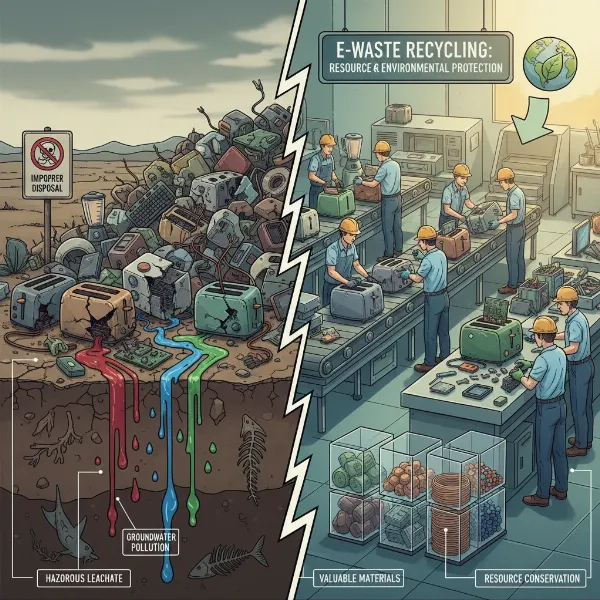 Illustration of hazardous materials from e-waste like toasters leaching into soil and water, contrasting with valuable material recovery.
What Materials Are Inside Your Toaster?
A seemingly simple toaster is a complex assembly of various materials, many of which can be recycled or require special handling due to their potential hazardous nature. Understanding these components highlights the importance of proper e-waste processing.
Common materials found in toasters include:
- Metal Housings: Often steel or aluminum, which are highly recyclable.
- Heating Elements: Typically made from nichrome wire, which contains nickel and chromium.
- Copper Wiring: Found in the power cord and internal connections, a valuable and highly recyclable metal.
- Plastic Components: Used for the exterior casing, control knobs, and internal supports. Different types of plastics may be present.
- Electronic Components: Circuit boards, sensors, and timers, especially in digital or “smart” toasters. These can contain trace amounts of hazardous materials like lead and cadmium.
The presence of these diverse materials, particularly the electronic and metallic components, means that toasters cannot be efficiently or safely processed through standard curbside recycling programs designed for paper, plastic bottles, or glass. They require specialized e-waste recycling facilities equipped to separate and recover these distinct materials while safely managing any hazardous substances.
How to Responsibly Recycle Your Toaster: Your Options
When your toaster finally gives out, you have several responsible avenues for its disposal, ensuring it avoids the landfill and its components are handled correctly.
Option 1: Certified E-Waste Recyclers
The most recommended and environmentally sound option is to take your broken toaster to a certified e-waste recycling facility. These specialized centers are equipped with the knowledge and technology to safely dismantle toasters, separate materials, and properly dispose of any hazardous components.
- How to find one: Websites like Earth911.com offer a recycling center search, allowing you to enter your material (e.g., “small appliances” or “electronics”) and zip code to find local options. Your local municipal waste management website is also an excellent resource.
- Benefits: Certified recyclers ensure that valuable metals are recovered and hazardous materials are prevented from entering the environment. They maximize the amount of material recycled and minimize waste.
|
Our Picks for the Best Toaster in 2026
As an Amazon Associate I earn from qualifying purchases.
|
||
| Num | Product | Action |
|---|---|---|
| 1 | bella 2 Slice Slim Toaster, Fits-anywhere™ Kitchenware, 6 Setting Shade Control with Reheat & Cancel Buttons, Fits sourdough, 10” Long Slot, Anti Jam & Auto Shutoff, 900 Watt, Plum |

|
| 2 | KEYWIND VTG RIC DELUXE LONG SE |
|
| 3 | STRING SET BASS STD 45w 55w 75w 105w |
|
| 4 | Amazon Basics 2 Slice Toaster, With 6 Browning Settings, Extra Wide Slots For Bagels and Special Breads, Removable Easy-to-Clean Crumb Tray, Cancel/Defrost/Bagel Buttons, 900W, Black & Silver |
|
| 5 | bella 2 Slice Slim Toaster, Fits-anywhere™ Kitchenware, 6 Setting Shade Control with Reheat & Cancel Buttons, Fits sourdough, 10” Long Slot, Anti Jam & Auto Shutoff, 900 Watt, Blossom |
|
| 6 | Touch Screen Toaster - 4 Slice, 2 Extra Long Slots - 5 Bread Types and 6 Browning Levels - Defrost, Reheat, Favorite, & Single Slot Modes - For Toast, Bagels, & Waffles – White |
|
| 7 | bella 2 Slice Slim Toaster, Fits-anywhere™ Kitchenware, 6 Setting Shade Control with Reheat & Cancel Buttons, Fits Sourdough, 10” Long Slot, Anti Jam & Auto Shutoff, 900 Watt, Surf |
|
| 8 | bella 2 Slice Slim Toaster, Fits-anywhere™ Kitchenware, 6 Setting Shade Control with Reheat & Cancel Buttons, Fits Sourdough, 10” Long Slot, Anti Jam & Auto Shutoff, 900 Watt, Seaglass |
|
| 9 | Elite Gourmet ECT1027B Cool Touch Toaster with 6 Temperature Settings & Extra Wide 1.25" Slots for Bagels, Waffles, Specialty Breads, Puff Pastry, Snacks, ETL Certified, 2 Slices, Black |
|
| 10 | bella 2 Slice Slim Toaster, Fits-anywhere™ Kitchenware, 6 Setting Shade Control with Reheat & Cancel Buttons, Fits sourdough, 10” Long Slot, Anti Jam & Auto Shutoff, 900 Watt, Oatmilk |
|
Option 2: Retailer Take-Back Programs
Many electronics and appliance retailers offer in-store recycling programs for small appliances, sometimes regardless of where the item was originally purchased. Companies like Currys, for example, provide free in-store recycling for old tech.
- How to find one: Check the websites of major electronics retailers in your area or call their customer service to inquire about their appliance recycling policies.
- Benefits: This can be a convenient option, often free, and ensures your toaster goes to a facility that knows how to handle e-waste.
Option 3: Donation and Reuse (When Applicable)
If your toaster is still in good working condition, or perhaps has a minor, easily repairable flaw, consider donating it. This extends the product’s life cycle, prevents it from becoming waste prematurely, and provides a useful item to someone in need.
- Organizations: Non-profit organizations like Goodwill, The Salvation Army, and Habitat for Humanity ReStore often accept working small appliances. Some may even accept broken items for repair and resale.
- Community Groups: Local community Facebook groups or online marketplaces can also be great platforms to offer a working toaster for free to someone who can use it.
- Benefits: Donation is a fantastic way to reduce waste, support charitable causes, and provide affordable household items to others.
Option 4: Municipal & Community Recycling Events
Your local city or county council may host special collection days or maintain permanent drop-off sites for e-waste and household hazardous waste. These events are often seasonal or by appointment.
- How to find one: Visit your local government’s waste management department website or call them directly for information on e-waste collection schedules and locations.
- Benefits: These programs are typically free for residents and ensure that e-waste is channeled to appropriate processing facilities.
The Journey of Your Toaster: What Happens After You Recycle It?
Once you’ve dropped off your toaster at an authorized facility, it embarks on a specialized journey designed for maximum material recovery and environmental protection. This multi-step process ensures that components are handled safely and efficiently.
- Collection or Drop-Off: Your toaster is received at a dedicated e-waste facility, which may be a permanent site, a retailer, or a special collection event.
- Depollution & Component Separation: Trained technicians inspect the toaster, identifying and separating any electronic or regulated components that require specific handling, such as circuit boards or parts containing hazardous materials. This step prioritizes safety and prevents contamination.
- Disassembly & Sorting: The toaster is carefully dismantled. Metals (steel, aluminum, copper) are separated from plastics and other materials. This creates clean material streams, crucial for effective recycling.
- Responsible Material Recovery: The separated materials are then sent to specialized processors. Metals are typically melted down and refined for reuse, plastics are shredded and re-pelletized, and electronic components are processed through licensed channels to extract valuable rare earth metals and safely manage hazardous ones.
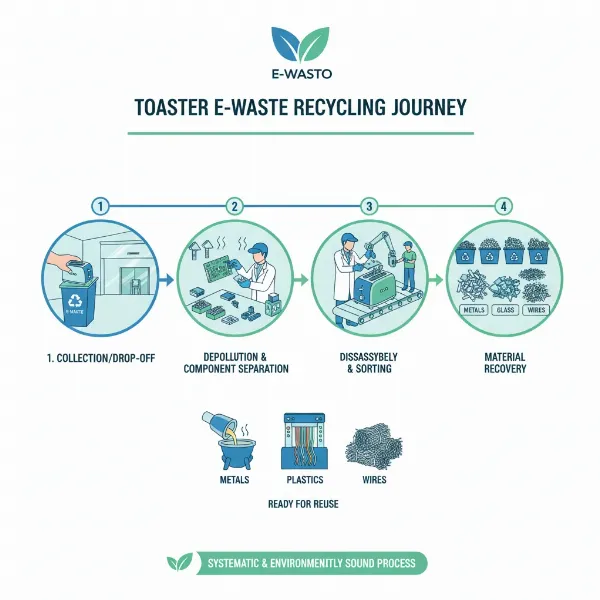 Diagram illustrating the multi-step e-waste recycling process for toasters, from collection to material recovery.
“Every toaster recycled represents a small but significant victory in the larger battle against e-waste. By choosing certified recycling, we’re not just disposing of an item; we’re actively participating in a circular economy, protecting vital resources and our environment.” – Jane Doe, Environmental E-Waste Specialist
Preparing Your Toaster for Recycling
While the recycling facility handles the heavy lifting, a few simple steps on your part can make the process smoother and safer:
- Unplug It: Always ensure your toaster is unplugged from the power outlet.
- Let It Cool: If you’ve used it recently, allow it to cool completely before handling.
- Clean Out Crumbs: Remove the crumb tray and empty any crumbs into the trash. This reduces fire hazards during transit and processing, and makes the item more hygienic for handlers.
- No Disassembly: Unless specifically instructed by the recycling center, do not attempt to disassemble your toaster yourself. E-waste facilities have the proper tools and safety protocols for this.
Conclusion
The responsible disposal of your old or broken toaster is more than just decluttering; it’s a vital act of environmental stewardship. As a form of e-waste, your toaster contains valuable recyclable materials and potentially hazardous substances that demand careful handling. By choosing certified e-waste recyclers, utilizing retailer take-back programs, or donating functional units, you play a crucial role in reducing landfill waste, conserving natural resources, and mitigating pollution. Let’s make informed choices, ensuring that even the smallest kitchen appliance contributes positively to a sustainable future. What small step will you take today to embrace responsible e-waste disposal?
Frequently Asked Questions
Can I throw my broken toaster in the regular trash?
No, toasters are considered electronic waste (e-waste) and should not be placed in regular household trash. Many jurisdictions have laws prohibiting this due to the hazardous materials they contain and the potential for environmental damage and fire hazards.
Are toaster ovens recycled the same way as pop-up toasters?
Yes, both pop-up toasters and toaster ovens are classified as e-waste and should be recycled through the same channels, such as certified e-waste recyclers or retailer take-back programs. Their internal components are similar in terms of recycling requirements.
Do toasters contain hazardous materials?
Yes, toasters can contain trace amounts of hazardous materials, including heavy metals like lead, cadmium, and lithium, particularly in their electronic components and wiring. These substances can be harmful if they leach into the environment from landfills.
Can I donate a broken toaster?
Generally, donation centers prefer items in good working condition. However, some organizations, like certain thrift stores or community repair shops, might accept broken toasters if they have the means to repair them. It’s best to call ahead and inquire.
What about other small kitchen appliances?
Most other small kitchen appliances, such as blenders, coffee makers, and electric kettles, also fall under the category of e-waste. They should be recycled responsibly through the same methods recommended for toasters to ensure proper material recovery and environmental protection.