There’s a common question that pops up in many kitchens: does a toaster with higher wattage really toast bread faster? It’s a detail often overlooked when buying a new appliance, but understanding toaster wattage can profoundly impact your morning routine and the quality of your toast. Far from being a mere technical specification, wattage is the heart of your toaster’s performance, influencing everything from speed to consistency and even overall energy use. Let’s delve into what toaster wattage means, how it impacts your daily toast, and what to consider when choosing the perfect appliance for your kitchen.
What is Toaster Wattage?
At its core, toaster wattage is a measure of the electrical power an appliance consumes when in operation. In simpler terms, it indicates the strength of the toaster’s heating elements. When you press the lever, electricity flows through these elements, typically made of a nickel-chromium alloy, encountering resistance. This resistance is what converts electrical energy into the radiant heat necessary to transform a simple slice of bread into golden, crispy toast. The higher the wattage, the more electrical energy the toaster can convert into heat within a given timeframe, essentially determining how quickly and intensely it can perform its job.
The Direct Link: Wattage and Toasting Speed
The relationship between a toaster’s wattage and its toasting speed is straightforward and direct: higher wattage generally leads to faster toasting times. This is because a more powerful toaster can heat its elements more rapidly, reaching optimal toasting temperatures quicker.
For instance, a standard 700-watt toaster might take one to two minutes to toast a slice of bread, while a high-performance 1500-watt model could achieve the same result in a mere 30 to 45 seconds. This significant difference in speed can be a game-changer, especially for busy households where every second counts during frantic morning preparations. Faster heat-up times mean your bread spends less time idling and more time actively browning, making it a more efficient option for those quick, essential breakfast moments.
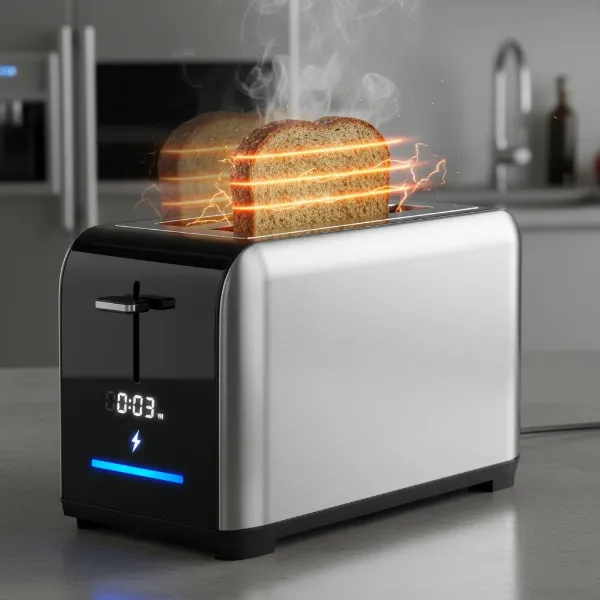 High wattage toaster quickly browning bread, illustrating efficient and fast toasting performance.
Beyond Speed: How Wattage Affects Toast Quality
While speed is a primary benefit, the influence of wattage extends far beyond just how quickly your toast is ready. It also plays a crucial role in the overall quality and consistency of your toast.
Higher wattage toasters are better equipped to deliver consistent, even browning across the entire surface of the bread. They maintain a more stable heat output, even if there are slight fluctuations in your home’s voltage. This stable, intense heat facilitates the Maillard reaction more effectively, creating that desirable crispy exterior while often retaining a softer, moist interior.
Conversely, lower-wattage toasters, due to their slower heating process, can sometimes dry out the bread before it achieves adequate browning, leading to a less satisfying texture. They may also struggle with consistency, producing unevenly browned slices. This difference becomes even more noticeable when toasting specialty items like thicker bread slices, bagels, or frozen items straight from the freezer. Higher wattage provides the necessary power to penetrate these denser or colder items, ensuring they toast thoroughly without simply burning the surface.
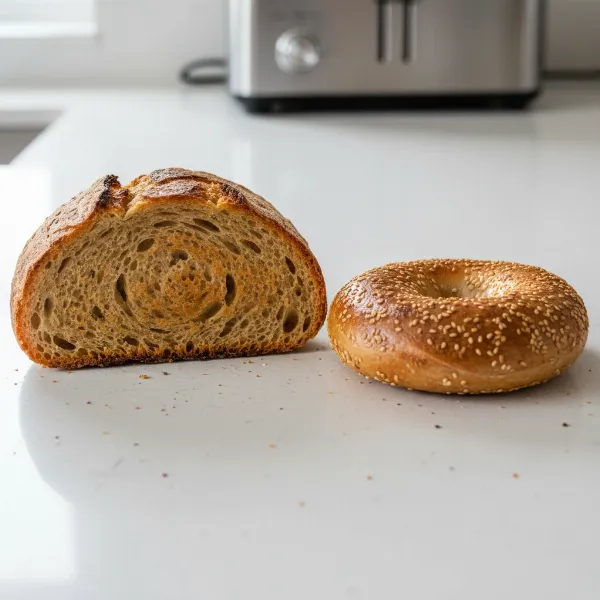 Perfectly and evenly toasted slices of thick bread and a bagel, showcasing superior toast quality.
Common Toaster Wattage Ranges
Toasters come in a variety of wattage ranges, each suited for different needs and preferences:
- Low-Power Toasters (800-1000 watts): These are typically compact, 2-slice models designed for occasional use or smaller households. They are energy-efficient for light use but will take longer to toast and might not handle thicker items as effectively.
- Mid-Range Toasters (1000-1250 watts): This is the most common range for household toasters, offering a good balance between speed, performance, and energy consumption. They are generally suitable for everyday use and can handle a variety of bread types.
- High-Power Toasters (1250-1800+ watts): Found in more premium 2-slice and most 4-slice toasters, these models deliver rapid toasting and superior consistency. They are ideal for larger families, frequent toasters, or those who enjoy thicker breads and bagels.
- Toaster Ovens (1200-2000+ watts): These larger appliances, which double as small ovens, naturally have higher wattages due to their increased capacity and diverse functions like baking, broiling, and roasting.
Wattage and Energy Efficiency: A Deeper Look
It might seem counterintuitive, but a higher wattage toaster can sometimes be more energy-efficient in the long run, especially for frequent users. While it draws more power at any given moment, its ability to toast faster means it operates for a shorter duration. This “faster burst” approach can lead to less overall energy consumption per slice compared to a lower-wattage toaster that needs to run for a longer period to achieve the desired level of browning.
The total energy consumed, measured in kilowatt-hours (kWh), depends on both wattage and usage time. A 1500-watt toaster used for 30 seconds might consume less energy than an 800-watt toaster running for 2 minutes to achieve the same toastiness. Therefore, for optimal energy use, it’s not just about the wattage rating but also how effectively and quickly the toaster completes its cycle.
Choosing the Right Toaster Wattage for Your Needs
Selecting the ideal toaster wattage requires considering your personal toasting habits and household demands:
- Household Size and Frequency: For a single person or occasional toast, a mid-range toaster around 900-1200 watts offers a good balance. Larger families or those who frequently toast multiple slices will benefit from a higher wattage model (1200-1500+ watts) for speed and efficiency.
- Types of Bread: If your diet includes a lot of thick artisanal bread, bagels, or frozen waffles, a higher wattage toaster is a wise investment. It will ensure these items are toasted thoroughly and evenly without becoming dry or burnt.
- Time Constraints: For those perpetually in a hurry, the speed of a high-wattage toaster is a clear advantage.
Ultimately, the goal is to find a toaster that provides the best toasting experience without excessive wait times or inconsistent results.
Conclusion
The answer to whether higher wattage means faster toast is a resounding yes. More wattage directly translates to quicker heat generation, resulting in significantly reduced toasting times. Beyond just speed, higher wattage also contributes to superior toast quality, offering more even browning, better consistency, and the ability to handle a wider variety of bread types with ease. While high-wattage toasters draw more power instantaneously, their efficiency in delivering rapid results can often lead to lower overall energy consumption per use.
Understanding these dynamics empowers you to make an informed choice, ensuring your next toaster is not just another appliance, but a crucial component of a perfect, hassle-free breakfast experience. So, what wattage will power your ideal morning toast?
Frequently Asked Questions
What is the ideal wattage for a toaster?
|
Our Picks for the Best Toaster in 2026
As an Amazon Associate I earn from qualifying purchases.
|
||
| Num | Product | Action |
|---|---|---|
| 1 | bella 2 Slice Slim Toaster, Fits-anywhere™ Kitchenware, 6 Setting Shade Control with Reheat & Cancel Buttons, Fits Sourdough, 10” Long Slot, Anti Jam & Auto Shutoff, 900 Watt, Surf |

|
| 2 | Touch Screen Toaster - 4 Slice, 2 Extra Long Slots - 5 Bread Types and 6 Browning Levels - Defrost, Reheat, Favorite, & Single Slot Modes - For Toast, Bagels, & Waffles – White |
|
| 3 | bella 2 Slice Slim Toaster, Fits-anywhere™ Kitchenware, 6 Setting Shade Control with Reheat & Cancel Buttons, Fits sourdough, 10” Long Slot, Anti Jam & Auto Shutoff, 900 Watt, Blossom |
|
| 4 | bella 2 Slice Slim Toaster, Fits-anywhere™ Kitchenware, 6 Setting Shade Control with Reheat & Cancel Buttons, Fits sourdough, 10” Long Slot, Anti Jam & Auto Shutoff, 900 Watt, Oatmilk |
|
| 5 | bella 2 Slice Slim Toaster, Fits-anywhere™ Kitchenware, 6 Setting Shade Control with Reheat & Cancel Buttons, Fits sourdough, 10” Long Slot, Anti Jam & Auto Shutoff, 900 Watt, Plum |
|
| 6 | Elite Gourmet ECT1027B Cool Touch Toaster with 6 Temperature Settings & Extra Wide 1.25" Slots for Bagels, Waffles, Specialty Breads, Puff Pastry, Snacks, ETL Certified, 2 Slices, Black |
|
| 7 | KEYWIND VTG RIC DELUXE LONG SE |
|
| 8 | bella 2 Slice Slim Toaster, Fits-anywhere™ Kitchenware, 6 Setting Shade Control with Reheat & Cancel Buttons, Fits Sourdough, 10” Long Slot, Anti Jam & Auto Shutoff, 900 Watt, Seaglass |
|
| 9 | Amazon Basics 2 Slice Toaster, With 6 Browning Settings, Extra Wide Slots For Bagels and Special Breads, Removable Easy-to-Clean Crumb Tray, Cancel/Defrost/Bagel Buttons, 900W, Black & Silver |
|
| 10 | STRING SET BASS STD 45w 55w 75w 105w |
|
The ideal wattage for most household toasters typically ranges from 800 to 1500 watts. This range strikes a good balance between fast toasting times, consistent performance, and efficient energy consumption for everyday use.
Can a lower wattage toaster still make good toast?
Yes, a lower wattage toaster can still produce good toast, especially for standard white bread or occasional use. However, it may take longer to toast, potentially dry out the bread before it browns, and might not achieve the same level of crispiness or evenness as a higher wattage model.
Do high wattage toasters use more electricity overall?
Not necessarily. While high wattage toasters draw more power at any given moment, they toast bread faster. This shorter operating time can mean they consume less overall electricity per slice compared to a lower wattage toaster that needs to run longer to achieve the same result.
How does bread thickness affect toasting time?
Thicker slices of bread require more time and heat to toast thoroughly because they contain more mass and moisture. High wattage toasters are better equipped to handle thicker slices, generating the necessary heat to toast them evenly without scorching the exterior.